








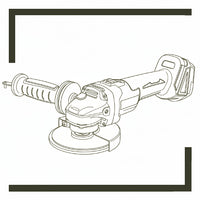

If you've ever shopped for cordless power tools, you may have noticed that impact wrenches and impact drivers look quite similar. Both deliver powerful rotational force and help make fastening jobs easier. So, do you really need both, or can one tool handle everything?
Although they share a similar working principle, impact wrench vs. impact driver comes down to three main differences: what they are designed to fasten, how much torque they deliver, and the accessories they use.
1. What Is an Impact Driver?
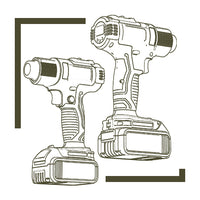
An impact driver is primarily designed for driving screws and other smaller fasteners into wood, metal, and similar materials. It combines rotational force with rapid impact action, helping drive fasteners through materials that may be difficult for a regular drill to handle.
Most impact drivers feature a 1/4-inch hex chuck that accepts screwdriver bits and other compatible accessories.
Common applications include:
- Driving long screws into wood and decking.
- Assembling furniture and installing cabinets.
- Securing framing and construction materials.
- Handling repetitive fastening tasks around the home.
Its compact design and quick bit changes make it a convenient choice for woodworking, home improvement, and general DIY projects.
2. What Is an Impact Wrench?
An impact wrench is built for tightening and loosening nuts and bolts, especially larger or more stubborn fasteners. It delivers powerful rotational impacts to help break loose tightly secured bolts with less manual effort.
Unlike an impact driver, an impact wrench typically features a square drive, commonly 1/2 inch or 3/8 inch, designed to hold compatible sockets.
Common applications include:
- Removing and installing car lug nuts.
- Working on automotive suspension components.
- Tightening bolts on machinery and equipment.
- Handling heavy-duty fastening and repair jobs.
With its higher torque output in many models, an impact wrench is especially useful for automotive maintenance and mechanical work.
3. Impact Wrench vs. Impact Driver: Key Differences
The easiest way to tell these tools apart is to look at their drive types and intended applications.
|
Feature |
Impact Driver |
Impact Wrench |
|
Main purpose |
Driving screws |
Tightening and loosening nuts and bolts |
|
Drive type |
1/4" hex chuck |
Square drive |
|
Accessories |
Screwdriver bits |
Impact sockets |
|
Typical applications |
Woodworking and DIY |
Automotive and mechanical repairs |
|
Torque |
Generally moderate to high |
Generally higher for heavy fastening |
Both tools use rotational impact mechanisms, but they are designed for different types of fasteners. An impact driver is not a direct replacement for an impact wrench when dealing with stubborn lug nuts, while an impact wrench can easily apply too much force for ordinary screw-driving tasks.
4. Which Tool Should You Choose?
The right choice depends on the projects you handle most often.
Choose an impact driver if you frequently work with wood, assemble furniture, install cabinets, or drive screws into construction materials. Its hex chuck makes switching between screwdriver bits quick and convenient.
Choose an impact wrench if you regularly work on cars, remove lug nuts, or handle larger bolts on machinery and equipment. Its socket drive and high torque make these jobs much easier.
If your projects include both woodworking and automotive repairs, having both tools gives you more flexibility. Just remember to use an appropriately rated torque wrench when a fastener requires a specific final tightening torque.
Choose the tool that matches your everyday needs, and you'll be better equipped to tackle your next DIY or repair project with confidence.
