








As summer gives way to fall, your yard may begin to take on a different look. Leaves start to fall, branches become more visible, and dead or overgrown limbs may be easier to spot. With winter approaching, it is a good time to take a closer look at your trees and consider any trimming or pruning they may need.
For branches that are difficult to reach from the ground, a pole saw can make routine trimming more convenient. With an extended reach and cordless options available, it can be a practical addition to your fall yard-care tools. In this guide, we'll explain what a pole saw is, how to choose the right cordless pole saw, and what to keep in mind when using one safely, so you can handle routine tree trimming and prepare your yard for the season ahead.
WHAT IS A POLE SAW
A pole saw is a compact chainsaw or pruning saw mounted on an extended pole, allowing you to trim elevated branches while keeping your feet on the ground. Compared with a standard chainsaw, a pole saw is designed for reaching branches that are beyond normal arm's reach.
Pole saws are commonly used for trimming small to medium branches, removing dead or damaged limbs, and maintaining trees around residential properties. Their extended design can also make it easier to work around fences, decks, driveways, and other areas where reaching high branches with a regular saw can be difficult.
POLE SAW VS. PRUNING SHEARS VS. CHAINSAW
Although these tools are related, they are designed for different jobs. A pruning shears is generally suited to smaller branches within easy reach. A pole saw extends that reach for elevated branches, while a standard chainsaw is generally intended for larger cutting tasks at ground level. Choosing the right tool for the job can improve control and make the work more manageable.
HOW TO CHOOSE THE RIGHT POLE SAW
1. Reach and Pole Length
Consider the height of the branches you normally need to trim. A telescoping or extendable pole can provide greater flexibility, but a longer reach can also affect balance and handling.
2. Cutting Bar Length
The cutting bar should match the type of branches you plan to trim. A shorter bar can be easier to control for routine pruning, while a longer bar may be more suitable for larger branches within the tool's rated capacity.
3. Motor Power and Cutting Speed
For a cordless pole saw, motor performance and chain speed affect cutting efficiency. Choose a model based on the size and type of branches you typically handle rather than focusing on one specification alone.
4. Adjustable Cutting Head
An adjustable cutting head lets you approach branches from different angles, which can be especially useful when working around dense canopies or branches growing in different directions.
5. Weight and Balance
Because a pole saw extends away from your body, weight and balance can have a major effect on comfort and control. A lightweight, well-balanced design is easier to maneuver, especially during longer trimming sessions.
6. Battery Compatibility
If you already own battery-powered tools, check whether the pole saw works with your existing platform. A compatible tool-only model can help you avoid purchasing another battery and charger.
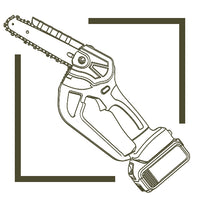
For those already using Milwaukee 18V batteries, take a look at the Ecarke 2-in-1 Electric Pole Saw Compatible with Milwaukee 18V Battery. It combines an 8-inch guide bar, 32 ft/s cutting speed, an extendable pole with up to 16 ft of total reach, and a detachable saw head that can be used as either a pole saw or handheld mini chainsaw. Automatic chain oiling and tool-free chain tensioning also make routine trimming and pruning more convenient. The battery is not included, so make sure to choose a model that fits the battery system you already use.
POLE SAW SAFETY & FALL TREE TRIMMING TIPS
- Before trimming, inspect the tree and the surrounding area carefully.
- Focus on dead, damaged, crossing, or problematic branches, and avoid removing branches simply to change the tree's shape.
- Keep people, vehicles, and other obstacles away from the work area, and never use a pole saw near electrical or utility lines.
- Keep both feet on stable ground, avoid overreaching or standing on a ladder, and wear appropriate protective equipment such as eye protection and gloves.
- For large limbs, branches near structures, or work that may involve utility lines, consider getting help from a qualified professional.
FAQs
Is a cordless pole saw worth considering?
A cordless pole saw can be convenient for homeowners who want greater freedom of movement without managing a power cord, especially when working across larger yards.
How high can a pole saw reach?
Reach depends on the pole length and the user's height. Models with adjustable extension poles can provide additional reach for higher branches.
Can a pole saw replace a chainsaw?
Not completely. A pole saw is designed primarily for elevated branch trimming, while a standard chainsaw is better suited to larger ground-level cutting tasks.
Is fall the best time to prune trees?
There is no single answer for every tree. Pruning timing depends on the species, local conditions, and the purpose of the pruning. For many trees, the late dormant season is preferred, while some situations require different timing.
